Monday to Friday - 8:00AM - 7:00PM
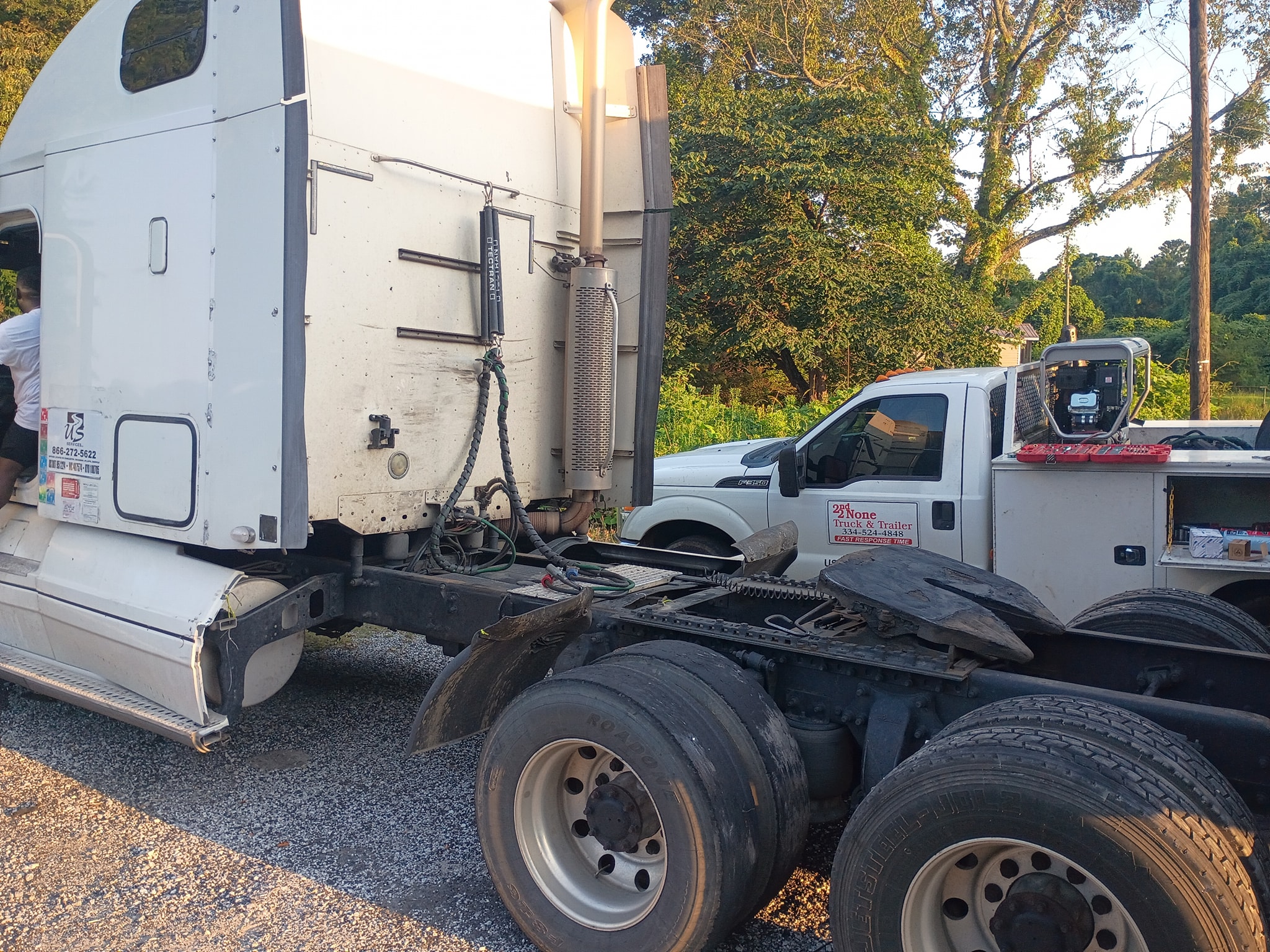
The two terms fleet maintenance services and semi truck repairs, which sound alike, create confusion because people have not learned their distinct meanings. Every week, 2nd 2 None Truck and Trailer provides service to owner operators, small fleets, and large operations.
People usually underestimate the importance of this distinction. Understanding the difference lets you create better planning while maintaining operational efficiency to ensure truck performance remains optimal.
Fleet maintenance services are the ongoing care of semi trucks and trailers with the goal of preventing problems before they happen. Think of it as a program rather than a one-time visit. Of waiting for a semi truck to fail on the road or throw a warning light at the worst time, fleet maintenance services focus on catching wear early, keeping systems in spec, and creating consistency across your fleet.
In the world, fleet maintenance often includes routine inspections, scheduled service intervals, compliance checks, and tracking service history so nothing gets missed. It also includes planning based on mileage, engine hours, duty cycle, and seasonal demand. For example, a semi truck running haul freight will have different service timing than a semi truck running regional routes with heavy stop-and-go.
For fleets, the biggest value is that maintenance becomes predictable. You can schedule service around dispatch, avoid surprise bills, and reduce the odds of a roadside event that turns into a missed delivery. Fleet maintenance services are all about preventing problems before they happen. That is a big deal for semi-truck drivers and fleet owners.
What fleet maintenance typically covers is broad because it is built around preventing failures across the vehicle, not just reacting to one symptom. The typical scope of work includes performing PM services, DOT inspections, brake and tire checks, battery and charging system checks, cooling system service, driveline inspections, and monitoring of general wear items. We develop customized service schedules that follow the actual operational patterns of semi trucks because different fleets have different requirements. A built plan accounts for mileage, idle time, load weight, terrain, and even driver habits.
On the other hand, semi-truck repairs are corrective fixes. A repair happens when something is broken, failing, or not operating safely. You need it diagnosed and restored to working condition. Repairs can be minor, like replacing a damaged air line, or major, like engine work, aftertreatment failures, electrical diagnosis, or drivability issues that require testing.
Repairs also tend to be less predictable. Even a great maintenance plan can not prevent everything. Parts fail, road hazards happen, sensors act up. Small issues can grow quickly if they are not caught early. When a driver calls us because the semi truck’s air pressure will not build, there is a coolant loss, or the semi truck will not regen, that is not maintenance anymore. That is a repair situation, and the priority is diagnosis and a safe, durable fix.
Common situations that lead to repairs are often clear. The following conditions serve as triggers, which include warning lights, unusual noises and vibration, loss of power, hard starts, overheating, low air pressure, uneven braking, and visible leaks. The complaint becomes more difficult to identify when the fuel economy decreases, or the semi truck starts to operate differently.
Experienced diagnostic work becomes essential for this situation. The two systems maintain distinct operations because fleet maintenance services operate to stop equipment failures, while fleets use maintenance to manage equipment wear and schedule maintenance breaks. Semi truck repairs react to existing problems that decrease performance, safety, and compliance with regulations.
In day-to-day operations, both matter. Fleet maintenance services keep your operation stable. Repairs get you back on the road when something unexpected happens. The fleets that perform best are the ones that do not treat maintenance like an afterthought and do not delay repairs when symptoms show up.
As fleets grow, maintenance stops being nice to have. Becomes a control system for your business. Without a plan, it is easy for service intervals to drift, for semi trucks to run past brake limits, or for small leaks to become major failures. It also becomes harder to budget because repair spending spikes at random at the worst time.
With a fleet maintenance program, your fleet benefits in a few practical ways. You can reduce roadside calls, lower the odds of missed loads, keep CSA and DOT compliance cleaner, and extend the life of ticket components. You also get decision-making when it comes to replacement timing because you can see patterns in repair history instead of guessing.
In a world, fleet maintenance prevents almost every repair. In the world, fleet maintenance reduces the number and severity of repairs, and it often changes the type of repairs you face. For example, if a coolant hose is inspected regularly, it is more likely to be replaced when it’s soft, cracked, or seeping. If it is ignored until it bursts, you are dealing with risk a tow, missed delivery time, and possibly bigger engine damage.
Maintenance also creates opportunities to spot signs that a repair is coming. A small oil seep, a worn U joint, a weak battery under load testing, or a DPF system showing regen concerns can be solved before they develop into equipment failures.
The right maintenance provider for your needs should have a shop that provides schedule building, record organization, and clear communication to support your decision-making. You need different technicians to follow the same inspection process because if one technician passes a semi truck, the other technician must identify the same problem.
At [company name], we focus on keeping service practical and easy to manage. The process includes your recommendations about safety items, which we will handle according to your dispatch requirements to minimize revenue loss from maintenance work. The characteristics that separate effective fleet maintenance programs from those that cause difficulties for their users include service intervals that use vehicle mileage and engine hours and duty cycle to determine maintenance needs, and a regular inspection system that produces usable documentation and a clear system that shows urgent matters that need attention and non-urgent matters that can wait.
If you are a driver, you are often the line of defense. When you notice changes early, you give everyone a better shot at avoiding a major repair. If a semi truck is coming in for scheduled service, it helps to share any symptoms, even if they feel minor. Little details like a vibration under load, air pressure building slower than normal, or a warning light that comes and goes can speed up diagnosis.
The cost differences between fleet maintenance and repairs are significant. Maintenance costs are usually. Spread out. Repairs can be unpredictable. Can climb quickly depending on the failure. The biggest financial advantage of fleet maintenance is not that it eliminates repairs but that it reduces emergencies. Roadside events tend to bring costs: towing, load delays, after-hours labor, and the domino effect of rescheduling freight.
Fleet maintenance also helps protect resale value and asset life. A semi truck with documented service history and fewer major failures tends to hold value than one that has been run hard with patchwork repairs.
Compliance and safety are also critical. For fleets and owner operators, compliance is not optional. DOT inspections, brake performance, tire condition, lighting, and air system integrity all matter. A structured fleet maintenance program keeps these items from turning into out-of-service situations.
If you are an owner-operator running a one-truck fleet, maintenance might sound like something only big fleets use. Even a single unit operation benefits from the same mindset: plan service, track intervals, inspect regularly, and fix issues early.
If you manage units, the stakes are higher. It is not one semi truck down; it is loads reshuffled, drivers waiting, and customers asking questions. A maintenance program is one of the ways to protect uptime.
At the time, no operation avoids repairs entirely. The goal is to reduce how often they happen, catch them before they become emergencies, and have a shop you trust when they do come up.
Ready to reduce downtime and get a plan in place? If you want breakdowns, cleaner compliance, and more predictable operating costs, we are ready to help. Call 2nd 2 None Truck and Trailer at 334-524-4848 to talk about fleet maintenance services and schedule an inspection. Get your semi truck diagnosed and repaired so you can get back on the road with confidence.