24/7 Emergency Roadside Assistance
A Complete Guide for Drivers and Dispatchers
A flat tire on a commercial truck isn’t just an inconvenience, it’s a potentially dangerous situation that requires immediate, decisive action. Whether you’re dealing with a slow leak discovered during your pre-trip inspection or a catastrophic blowout on the highway, knowing how to assess, manage, and resolve tire issues can save time, money, and most importantly, lives.
At 2nd 2 None Truck and Trailer, we’ve responded to countless tire emergencies, and we know that the difference between a minor delay and a major incident often comes down to the driver’s immediate response and decision-making. This comprehensive guide will equip both drivers and dispatchers with the knowledge needed to handle tire emergencies safely and effectively.
Understanding Commercial Truck Tire Failures
Types of Tire Failures
Not all tire problems are created equal. Understanding the type of failure you’re dealing with determines your response strategy and safety considerations.
Slow Leaks:
- Gradual pressure loss over time
- Often caused by nail punctures, valve stem issues, or rim leaks
- Usually manageable with temporary repairs
- May allow for controlled driving to a repair facility
Rapid Deflation:
- Quick but controlled air loss
- Often from larger punctures or sidewall damage
- Requires immediate attention but may be repairable
- Vehicle should be stopped as soon as safely possible
Catastrophic Blowouts:
- Sudden, violent tire failure
- Often accompanied by loud noise and vehicle pulling
- Creates immediate safety hazard
- Requires emergency stopping procedures
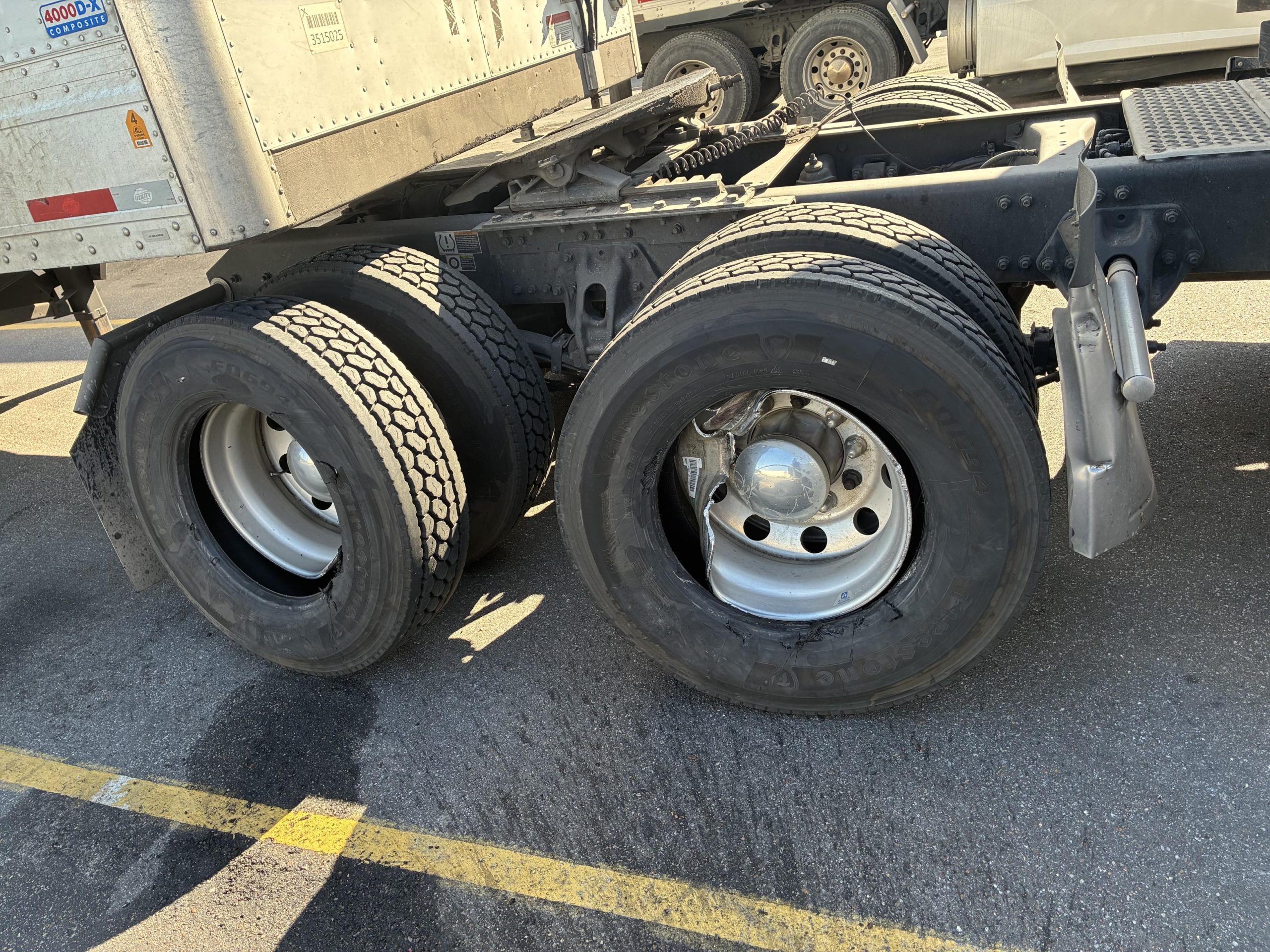
- Usually results in tire replacement, possible wheel damage
Sidewall Failures:
- Damage to the tire’s sidewall structure
- Cannot be repaired safely
- Requires immediate replacement
- Often indicates overloading or impact damage
Common Causes and Warning Signs
Understanding why tires fail helps prevent future incidents and informs your troubleshooting approach.
Primary failure causes:
- Underinflation (leading cause of tire failure)
- Overloading beyond tire capacity
- Road hazards (nails, debris, potholes)
- Excessive speed for conditions
- Improper mounting or balancing
- Age-related deterioration
- Manufacturing defects
Early warning signs:
- Unusual vibrations or pulling
- Visible bulges or cracks in sidewalls
- Uneven wear patterns
- Low pressure warnings
- Unusual road noise from specific wheels
Immediate Safety Response to Tire Failures
During a Blowout: Emergency Procedures
If you experience a tire blowout while driving, your immediate response can prevent a serious accident.
Critical steps (in order):
- Maintain control: Keep both hands firmly on the steering wheel
- Don’t brake suddenly: Gradual deceleration prevents loss of control
- Don’t overcorrect: Allow the vehicle to slow naturally while maintaining direction
- Signal and move right: Activate hazards and gradually move toward the shoulder
- Come to a controlled stop: Use gentle braking once you’re off the roadway
What NOT to do during a blowout:
- Don’t slam on the brakes
- Don’t jerk the steering wheel
- Don’t accelerate to “power through” the situation
- Don’t attempt to change lanes quickly
Securing the Scene After Stopping
Once you’ve safely stopped, immediate scene safety becomes your priority.
Essential safety steps:
- Activate all hazard lights immediately
- Deploy warning triangles according to FMCSA regulations
- Turn on all clearance and marker lights
- If safe to do so, raise the hood to increase visibility
- Exit the vehicle away from traffic when possible
Triangle placement for tire emergencies:
- 10 feet behind the truck
- 100 feet behind the truck
- 200 feet behind the truck
- Adjust placement for curves, hills, or limited visibility areas
On-Site Tire Assessment: What Drivers Can Safely Evaluate
Initial Visual Inspection
Before getting too close to a failed tire, conduct a visual assessment from a safe distance.
Look for:
- Tire position: Which tire(s) are affected
- Damage extent: Complete failure vs. partial deflation
- Debris presence: Nails, screws, or other foreign objects
- Wheel condition: Damage to rims or wheel components
- Surrounding damage: Fender, mud flap, or brake line damage
Safe Hands-On Assessment
Only attempt closer inspection when the vehicle is completely stopped, properly secured, and you’re in a safe location away from traffic.
Systematic inspection process:
1. External tire examination:
- Look for obvious punctures or embedded objects
- Check sidewall integrity for cuts, bulges, or cracks
- Assess tread separation or unusual wear
- Note any fluid leaks around the wheel area
2. Valve stem inspection:
- Listen for air leaks at the valve stem
- Check valve cap presence and condition
- Look for damage to the valve stem itself
3. Rim and wheel assessment:
- Check for visible rim damage or bends
- Look for separation between tire and rim
- Assess lug nut condition and tightness (don’t remove)
Using Basic Tools for Assessment
Every commercial driver should carry basic tire assessment tools.
Essential tools:
- Tire pressure gauge: Check remaining pressure in affected tire
- Flashlight or headlamp: Illuminate inspection areas
- Work gloves: Protect hands during inspection
- Tire thumper or dead blow hammer: Check tire pressure on dual wheels
Advanced assessment techniques:
- Pressure comparison: Compare affected tire to its dual or other tires
- Visual alignment check: Look for changes in vehicle stance
- Load shift assessment: Check if cargo has shifted due to tire failure
Temporary Repair Options: What Drivers Can Safely Attempt
When Temporary Repairs Are Appropriate
Temporary tire repairs should only be attempted under specific conditions and with proper equipment.
Suitable conditions for temporary repair:
- Small punctures in the tread area (not sidewall)
- Slow leaks that allow controlled inflation
- Safe work environment away from traffic
- Proper tools and materials available
- No structural damage to wheel or suspension
Situations requiring professional service:
- Sidewall damage of any kind
- Multiple punctures
- Tire separation or structural failure
- Wheel or rim damage
- Brake system involvement
- Hazardous work environment
Tire Plug Installation (Tread Area Only)
For qualified drivers with proper training and tools, temporary tire plugs can provide emergency repairs.
Required materials:
- Tire plug kit with installation tools
- Portable air compressor or CO2 cartridges
- Tire pressure gauge
- Safety equipment (gloves, eye protection)
Step-by-step plug installation:
- Locate the puncture: Remove any debris carefully
- Clean the hole: Use the reaming tool to clean and enlarge slightly
- Prepare the plug: Thread plug material through installation tool
- Insert the plug: Push firmly into puncture until two-thirds remain outside
- Remove installation tool: Pull straight out, leaving plug in place
- Trim excess: Cut plug material flush with tire surface
- Inflate tire: Restore proper pressure and check for leaks
Critical safety notes:
- Never attempt sidewall repairs
- Plugs are temporary solutions only
- Have tire professionally inspected and repaired as soon as possible
- Monitor tire pressure frequently after temporary repair
Emergency Inflation Options
Sometimes the issue is simply low pressure that can be temporarily resolved.
Portable inflation methods:
- 12V air compressors: Slow but reliable for gradual inflation
- CO2 cartridge systems: Quick inflation for emergency situations
- Manual pumps: Labor-intensive but always available
- Tire sealant products: Can seal small punctures while inflating
Inflation safety procedures:
- Never exceed recommended tire pressure
- Stand to the side, never in front of tire during inflation
- Check pressure frequently during inflation process
- Listen for air leaks during and after inflation
When to Call the Professionals: Decision Matrix
Clear Professional Service Indicators
Some tire situations require immediate professional intervention without attempting self-repair.
Immediate professional service required:
- Sidewall damage: Any cut, bulge, or separation
- Multiple tire failure: More than one tire affected
- Wheel damage: Bent, cracked, or separated rims
- Brake system involvement: Damaged lines, overheated brakes
- Suspension damage: Broken springs, damaged air bags
- Hazardous location: Unable to work safely
- Load complications: Hazmat, oversized, or shifted cargo
Risk Assessment for Self-Repair Attempts
Use this decision matrix to determine appropriate action:
Low Risk – Consider temporary repair:
- Single small puncture in tread area
- Slow leak with manageable pressure loss
- Safe work environment
- Proper tools and experience available
- No time-critical cargo constraints
Medium Risk – Evaluate carefully:
- Larger punctures or multiple small ones
- Moderate deflation rate
- Limited tools or experience
- Marginal work environment safety
- Time-sensitive deliveries
High Risk – Call professionals:
- Any sidewall involvement
- Rapid deflation or blowout
- Unsafe work location
- Lack of proper tools or experience
- Valuable or hazardous cargo
Communication Protocols for Drivers and Dispatchers
Driver-to-Dispatch Communication
Effective communication between drivers and dispatchers ensures appropriate response and resource allocation.
Essential information drivers must provide:
- Exact location: Mile markers, GPS coordinates, nearest exits
- Tire position: Which specific tire(s) are affected
- Failure type: Slow leak, rapid deflation, or blowout
- Safety status: Whether vehicle is in a safe location
- Traffic conditions: Highway, city street, or parking area
- Weather factors: Conditions affecting repair timing
- Cargo considerations: Load type, temperature requirements, delivery urgency
Dispatcher Decision Support
Dispatchers play a crucial role in coordinating appropriate response to tire emergencies.
Dispatcher action checklist:
- Assess driver safety: Ensure driver is in a safe location
- Evaluate repair options: Self-repair vs. professional service
- Coordinate resources: Mobile service, towing, or driver pickup
- Notify customers: Update delivery schedules if necessary
- Document incident: Record details for insurance and maintenance tracking
Questions dispatchers should ask:
- “Are you in a safe location away from traffic?”
- “What type of tire failure are you experiencing?”
- “Do you have the tools and experience for temporary repair?”
- “Are there any other vehicles or equipment damage?”
- “What’s the condition of your cargo?”
Service Provider Communication
When contacting professional services like 2nd 2 None Truck and Trailer:
Critical information to provide:
- Vehicle location and accessibility
- Tire size and type specifications
- Nature of failure and any attempted repairs
- Timeline requirements and cargo considerations
- Any special equipment needs (crane, heavy-duty tools)
Preventive Measures: Avoiding Future Tire Emergencies
Pre-Trip Inspection Excellence
The most effective tire emergency is the one that never happens. Comprehensive pre-trip inspections remain your primary defense.
Daily tire inspection checklist:
- Visual inspection: Look for cuts, bulges, foreign objects, and unusual wear
- Pressure check: Use reliable gauge on all tires including spares
- Tread depth measurement: Ensure legal minimums and even wear patterns
- Valve stem condition: Check for cracks, damage, or missing caps
- Dual tire clearance: Ensure proper spacing and no contact between duals
Understanding Tire Pressure Management
Proper tire pressure management prevents the majority of tire failures.
Pressure monitoring best practices:
- Check pressures when tires are cold (before driving)
- Use a quality, calibrated pressure gauge
- Maintain manufacturer-recommended pressures for load conditions
- Account for temperature variations (pressure increases with heat)
- Monitor pressure more frequently in extreme weather
Load-adjusted pressure requirements:
- Understand your tire’s load capacity ratings
- Adjust pressure based on actual cargo weight
- Never exceed maximum rated tire pressure
- Consider pressure increases from highway driving
Tire Rotation and Maintenance Programs
Regular maintenance extends tire life and prevents premature failures.
Effective rotation strategies:
- Follow manufacturer-recommended rotation patterns
- Rotate every 25,000-50,000 miles depending on wear patterns
- Keep detailed records of rotation dates and mileage
- Use rotation opportunities for detailed inspections
Working with Professional Mobile Tire Services
What to Expect from Professional Service
Understanding professional tire service capabilities helps you make informed decisions about when to call for help.
Typical mobile service capabilities:
- Complete tire replacement (most common solution)
- Professional-grade tire repairs for appropriate damage
- Wheel and rim inspection and minor repairs
- Pressure monitoring system service
- Multi-tire replacements for fleet matching
Services requiring shop facilities:
- Major wheel repairs or replacements
- Suspension system repairs
- Brake system work
- Alignment services
- Tire mounting with specialized equipment
Preparing for Service Arrival
Proper preparation speeds up professional service and ensures safety.
Before service arrives:
- Secure the work area with proper warning devices
- Document tire damage with photos if possible
- Gather vehicle registration and maintenance records
- Prepare information about tire specifications and preferences
- Ensure safe access for service vehicles
During service:
- Stay clear of work area unless assistance is requested
- Provide accurate information about the failure
- Discuss repair vs. replacement options
- Understand warranty terms for work performed
Cost Considerations and Budget Planning
Understanding Tire Emergency Costs
Tire emergencies involve multiple cost factors beyond just tire replacement.
Direct costs:
- Replacement tire(s) and installation
- Service call fees for mobile repair
- Towing if required
- Additional parts (valves, weights, etc.)
Indirect costs:
- Delivery delays and customer relations
- Driver downtime and wages
- Potential cargo issues (reefer fuel, spoilage)
- Lost revenue opportunities
Making Cost-Effective Decisions
Sometimes the cheapest immediate solution isn’t the most economical long-term choice.
Factors to consider:
- Quality vs. price: Cheaper tires may have shorter service life
- Emergency vs. scheduled service: Emergency calls typically cost more
- Temporary vs. permanent repairs: Temporary fixes may lead to recurring issues
- Single vs. dual replacement: Matching tire wear extends overall life
Documentation and Follow-Up Procedures
Incident Documentation
Proper documentation protects your operation and provides valuable maintenance data.
Essential documentation:
- Date, time, and location of tire failure
- Mileage and service history of failed tire
- Cause of failure if determinable
- Repairs performed and by whom
- Photos of damage and repair work
- Service provider information and costs
Insurance and Warranty Considerations
Understanding coverage options can significantly impact emergency costs.
Insurance coverage types:
- Comprehensive coverage for road hazard damage
- Commercial auto policies with tire coverage
- Cargo insurance if load is affected
- Roadside assistance programs
Warranty claims:
- Tire manufacturer defect warranties
- Road hazard warranties from tire dealers
- Service warranties on repair work performed
- Fleet program warranties and road service
The 2nd 2 None Truck and Trailer Advantage in Tire Emergencies
When tire emergencies strike, having a reliable partner with extensive experience in commercial tire service makes all the difference. Our mobile tire service teams are equipped with the tools, equipment, and expertise to handle any tire emergency quickly and safely. We understand that your time is money, and our goal is to get you back on the road with minimal disruption to your operation.
Our comprehensive tire services include emergency roadside assistance, complete tire replacement, professional repairs, and preventive maintenance programs designed to minimize emergency situations. We stock a wide range of commercial tire sizes and brands, ensuring we can match your specific needs and budget requirements.
Technology and Modern Tire Management
Tire Pressure Monitoring Systems (TPMS)
Modern commercial vehicles often include electronic monitoring systems that can prevent many tire emergencies.
TPMS benefits:
- Real-time pressure monitoring
- Early warning of slow leaks
- Temperature monitoring for overheating detection
- Data logging for maintenance planning
Understanding TPMS alerts:
- Distinguish between pressure and temperature warnings
- Know your system’s alert thresholds
- Understand the difference between warnings and critical alerts
- Learn proper response to different alert types
Mobile Apps and Digital Tools
Technology can assist both drivers and dispatchers in managing tire emergencies.
Useful mobile applications:
- GPS location sharing for accurate service dispatch
- Tire pressure calculators for load adjustments
- Service provider locators and contact information
- Digital documentation and photo sharing
- Fleet management integration
Training and Skill Development
Driver Training Programs
Investing in proper driver training reduces tire emergencies and improves response when they occur.
Essential training topics:
- Proper pre-trip inspection techniques
- Tire pressure management
- Recognition of tire wear patterns
- Safe emergency response procedures
- Basic tire repair techniques and limitations
Dispatcher Training Considerations
Dispatchers benefit from understanding tire emergency management to provide better support.
Dispatcher training areas:
- Tire emergency assessment questions
- Service provider coordination
- Customer communication during delays
- Cost-benefit analysis for repair decisions
- Insurance and warranty claim procedures
Final Thoughts: Building a Comprehensive Tire Emergency Plan
Successful tire emergency management combines preparation, training, proper equipment, and reliable professional support. The key is developing systematic approaches that prioritize safety while minimizing operational disruption.
Every fleet operation should have written procedures for tire emergencies, including decision matrices for repair vs. replacement, approved service providers, and communication protocols. Regular review and practice of these procedures ensure they’re effective when emergencies actually occur.
Remember that tire emergencies are often preventable through proper maintenance and inspection programs. However, when they do occur, having the right knowledge, tools, and professional support can turn a potentially serious situation into a manageable inconvenience.
At 2nd 2 None Truck and Trailer, we’re committed to helping you maintain safe, efficient operations whether through preventive maintenance programs or emergency response services. Our experienced team understands the unique challenges of commercial tire management and is ready to provide the expert support you need to keep your operation moving safely and profitably.
For 24/7 emergency tire service and comprehensive commercial tire solutions, contact 2nd 2 None Truck and Trailer. Our mobile service teams are equipped to handle any tire emergency quickly and professionally, getting you back on the road with minimal downtime.